If you are struggling with dropped calls or slow data in your home or office, a verizon lte network extender might be the exact solution you need in 2026.
Despite the rapid expansion of 5G networks across the United States, indoor cellular reception remains a significant challenge for many users.
Modern building materials, such as low-e glass, concrete, and metal roofs, frequently block external cell tower signals.
This creates frustrating dead zones right where you live, work, and need reliable communication the most.
By deploying a verizon lte network extender, you can completely bypass these physical barriers and establish a strong connection.
This device essentially acts as a personal, mini cell tower inside your property.
In this comprehensive guide, we will explore everything from setup to troubleshooting, ensuring you get the best possible signal.
Contents
Understanding the Basics of a Verizon LTE Network Extender
A verizon lte network extender is technically classified in the telecommunications industry as a femtocell.
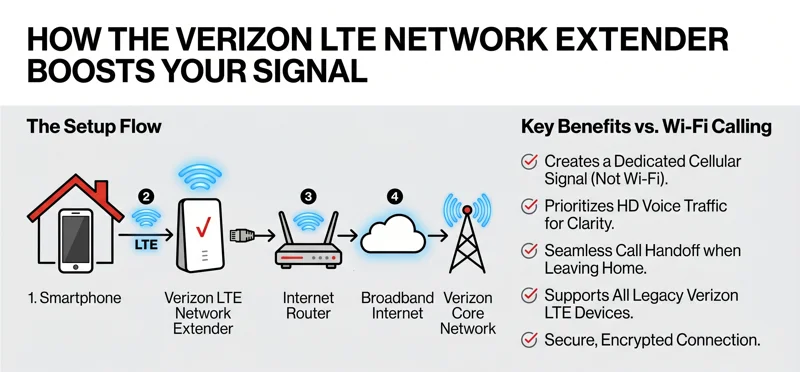
Instead of pulling a weak signal from an outside cell tower and amplifying it, it generates its own highly reliable cellular signal.
It does this by routing your mobile calls, texts, and cellular data over your existing high-speed home broadband internet connection.
This guarantees that as long as your home internet is stable, your cellular connection will be too.
This technology is an absolute game-changer for rural properties or dense urban apartments where macro tower signals cannot reach.
Why You Still Need a Verizon LTE Network Extender in 2026
While Wi-Fi calling is incredibly popular in 2026, it is not always perfect for every situation.
A dedicated verizon lte network extender provides a much more seamless handoff when you walk out your front door and switch back to the macro network.
It also ensures that legacy cellular devices and smart home security backups maintain a constant, secure connection.
Furthermore, it prioritizes HD Voice traffic, ensuring business calls sound professional, clear, and free from the jitter sometimes associated with Wi-Fi calling.
| Feature Feature | Verizon LTE Network Extender | Wi-Fi Calling |
|---|---|---|
| Connection Method | Creates a dedicated cellular LTE signal | Uses existing Wi-Fi router signal |
| Device Compatibility | Works with all Verizon cellular devices | Requires Wi-Fi Calling enabled smartphones |
| Call Handoff | Seamless transition to outside cell towers | Can drop calls when leaving Wi-Fi range |
Setting Up Your New Verizon LTE Network Extender
Setting up a verizon lte network extender is generally a straightforward, plug-and-play process, but physical placement is critical.
You must connect the device directly to your main router or network switch using a high-quality Ethernet cable.
It requires an active, high-speed broadband internet connection with minimal latency to function properly.
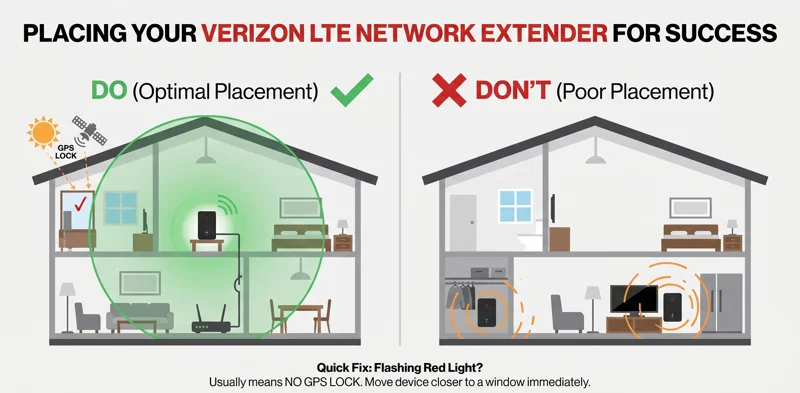
The most crucial, and often misunderstood, step is establishing a solid GPS lock before the device will broadcast.
GPS Requirements for the Verizon LTE Network Extender
By federal law, every verizon lte network extender must verify its exact physical location using GPS satellites.
This strict regulation ensures that 911 emergency services receive accurate location data if you make an emergency call from your home.
Therefore, the extender must be placed near a window, or you must utilize the included GPS extension cable.
Without a confirmed and stable GPS signal, the device will simply refuse to broadcast a cellular network to your phones.
Technical Specifications of the Verizon LTE Network Extender
To ensure optimal performance and crystal-clear calls, your home internet network must meet specific technical criteria.
The verizon lte network extender requires a minimum broadband speed to handle voice and data traffic effectively.
Latency, often referred to as ping, is actually more important than your raw download speed for maintaining smooth voice calls.
If your internet has high jitter or latency spikes, you may experience robotic voices or dropped audio.
| Network Requirement | Minimum Specification | Recommended Specification |
|---|---|---|
| Download Speed | 10 Mbps | 50 Mbps or higher |
| Upload Speed | 5 Mbps | 20 Mbps or higher |
| Network Latency (Ping) | Under 100ms | Under 40ms |
Security Features of the Verizon LTE Network Extender
Many new users understandably wonder if their neighbors can use their internet connection through the newly installed device.
The verizon lte network extender securely tunnels all cellular traffic directly to Verizon’s core network servers.
It uses advanced IPsec VPN technology, meaning the cellular data passing through your router is heavily encrypted.
While anyone with a Verizon phone in range can connect to the cellular signal, they absolutely cannot access your personal local area network (LAN) or smart home devices.
“Deploying a personal femtocell remains one of the most effective strategies for eliminating indoor cellular dead zones and ensuring uninterrupted HD Voice quality for remote workers.”
Troubleshooting Your Verizon LTE Network Extender
Even with a perfect initial setup, you might encounter occasional technical issues with your verizon lte network extender.
The most common problem reported by users is a flashing red indicator light on the front panel.
This specific light usually indicates a failed GPS connection, meaning the device has lost its view of the sky.
If this happens, try moving the GPS antenna closer to a window, ensuring there are no metal screens blocking the signal.
Router Configuration for the Verizon LTE Network Extender
Sometimes, strict firewall settings on your home router can block the device from reaching Verizon’s remote servers.
Your verizon lte network extender requires certain network ports (like UDP 500 and UDP 4500) to remain fully open.
You may need to access your router’s administrative dashboard to manually enable IPSec passthrough.
Additionally, ensuring Quality of Service (QoS) is enabled for the extender’s MAC address can prevent voice lag when your family is streaming movies or gaming.
For advanced port configurations and specific firewall rules, it is highly recommended to consult the official Verizon Network Extender Support documentation.
Maximizing Coverage with the Verizon LTE Network Extender
The physical placement of your verizon lte network extender heavily dictates its overall indoor coverage area.
For the absolute best results, place it in a central, elevated location within your home or office building.
Keep it far away from large metal appliances, thick concrete load-bearing walls, or other wireless broadcasting devices like baby monitors.
A single consumer-grade verizon lte network extender typically covers up to 7,500 square feet under ideal, unobstructed conditions.
Managing Users on Your Verizon LTE Network Extender
By default, the system operates in an open access mode, allowing any compatible Verizon cellular device nearby to connect.
However, you can securely configure your verizon lte network extender to prioritize specific phone numbers that you authorize.
Through your online Verizon account dashboard, you can add up to 50 family members or employees to a priority access list.
This prioritization ensures that in a crowded environment, your critical devices always get the cellular bandwidth they need.
Comparing the Verizon LTE Network Extender Models
Verizon offers different variations of this technology depending on the size and scope of your specific deployment needs.
The standard consumer model is perfectly sized for residential homes and small retail spaces.
For larger commercial environments, Verizon provides enterprise-grade hardware capable of handling massive simultaneous call volumes.
Understanding these hardware differences is crucial before making an investment for your specific property.
| Extender Model Type | Max Coverage Area | Simultaneous Active Calls |
|---|---|---|
| Consumer / Small Home | Up to 7,500 sq ft | Up to 14 active users |
| Enterprise / Large Office | Up to 31,500 sq ft | Up to 64 active users |
| Business Smart Hub | Variable / Scalable | Custom Enterprise Tier |
Is the Verizon LTE Network Extender Worth It in 2026?
Determining the actual value of a verizon lte network extender depends entirely on your specific connectivity needs.
If you run a remote home business and simply cannot afford dropped calls with clients, the hardware investment is absolutely justified.
It provides a guaranteed level of voice stability that standard home Wi-Fi calling sometimes fails to deliver during peak internet hours.
Ultimately, a verizon lte network extender transforms a frustrating, silent dead zone into a reliable hub of seamless connectivity.
Read also: the Verizon Unlock Policy
Frequently Asked Questions About the Verizon LTE Network Extender
Does the verizon lte network extender require a monthly subscription fee?
No, there are no additional monthly subscription fees to operate the extender. You only pay the upfront hardware cost for the device itself.
Will the verizon lte network extender work with other carriers like AT&T or T-Mobile?
No. The device is specifically programmed and locked to only broadcast and support the Verizon Wireless cellular network.
Does a verizon lte network extender use my internet data cap?
Yes, because it routes cellular traffic over your home internet, the data consumed by connected phones will count toward your home ISP data cap.
Can I use a verizon lte network extender in an RV or while traveling?
It is not recommended for travel. The device requires a highly stable broadband connection and a fixed GPS location to function legally and properly.
Does the verizon lte network extender support 5G devices?
Yes, 5G smartphones are backward compatible. They will seamlessly connect to the strong 4G LTE signal provided by the extender when indoors.
What is the maximum distance the GPS cable can reach?
The included GPS antenna cable is typically 23 feet long, allowing you plenty of room to route it to the nearest unobstructed window.
How do I know if my phone is connected to the verizon lte network extender?
Depending on your phone model, you may hear a short double-beep tone when initiating a call, or see a specific home network icon in your status bar indicating a femtocell connection.
Disclaimer: This article is for informational purposes only. Device specifications, network requirements, and carrier features are subject to change without notice. Always consult Verizon’s official documentation or customer support for the most current information regarding network equipment.