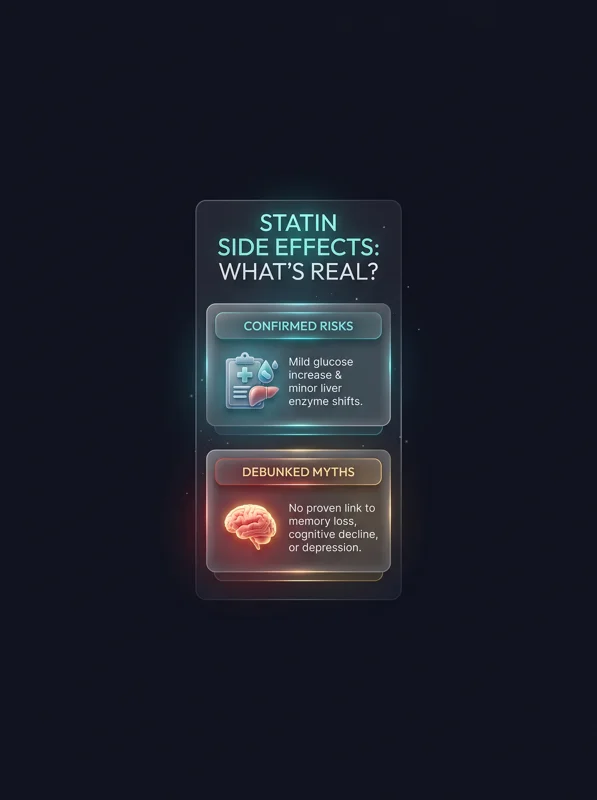
Statin Side Effects What the Evidence Shows is a critical topic for millions of cardiovascular patients in 2026. The internet is flooded with long lists of alleged adverse events, ranging from muscle aches to memory loss.
However, when looking closely at Statin Side Effects What the Evidence Shows, the scientific reality is much less alarming. Massive medical trials have separated actual physiological harm from perceived discomfort.
Understanding these medications is essential for treatment adherence. Let us dive into the latest data to see what is fact and what is fiction.
Contents
Analyzing Statin Side Effects What the Evidence Shows in Recent Trials
The Cholesterol Treatment Trialists (CTT) Collaboration recently published a groundbreaking meta-analysis. They evaluated 19 double-blind, randomized, placebo-controlled trials involving over 123,000 participants.
Their goal was to determine exactly which symptoms are causally linked to the medication. By thoroughly examining Statin Side Effects What the Evidence Shows, they found that only a handful of adverse events are genuinely significant.
Most notably, out of 66 adverse events listed in standard package inserts, only four remained statistically significant after adjusting for confounding factors.
Muscle Pain and Statin Side Effects What the Evidence Shows
Statin-associated muscle pain is the most frequent complaint leading to treatment discontinuation. However, the data tells a completely different story regarding causation.
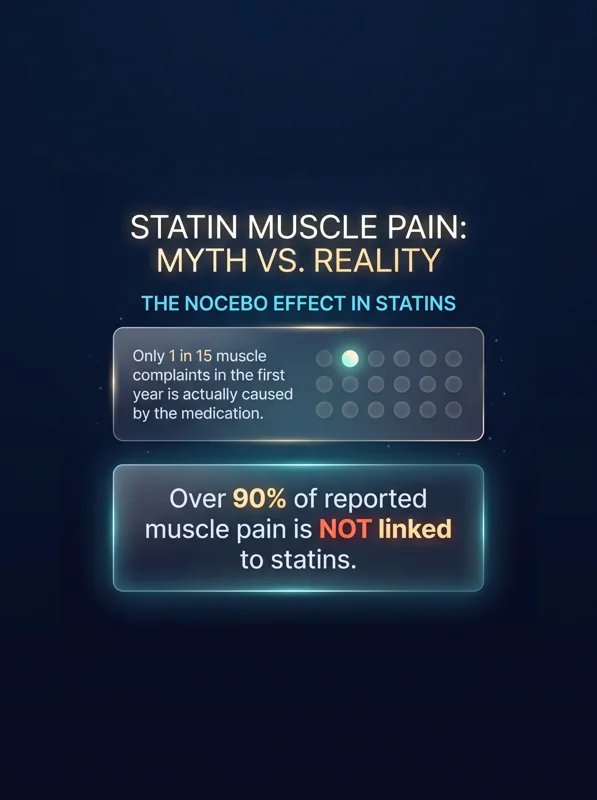
During the first year of therapy, the absolute risk increase for muscle pain is incredibly small. Statistically, for every 15 muscle complaints reported by patients, only one is actually caused by the drug.
“In randomized trials, more than 90% of the muscle complaints reported by patients prescribed statins were, mathematically speaking, not attributable to the statin.”
This massive discrepancy is largely attributed to the nocebo effect statins. Because patients expect to experience muscle pain based on warnings, they misattribute normal daily aches to their medication.
| Symptom Profile | Statin Group Incidence | Placebo Group Incidence | Relative Risk (First Year) |
|---|---|---|---|
| Muscle Pain / Weakness | 27.1% | 26.6% | 1.07 (7% increase) |
| After Year 1 | No significant excess | No significant excess | 0.99 (No risk increase) |
Metabolic Statin Side Effects What the Evidence Shows
While muscle pain is mostly a false alarm, exploring Statin Side Effects What the Evidence Shows reveals real metabolic impacts. The evidence is very clear regarding glucose metabolism.
There is a documented risk of statin induced new-onset diabetes. This effect is dose-dependent, meaning high-intensity statin therapy increases the risk more than moderate-intensity therapy.
However, the metabolic shift is generally minor. Over 62% of newly diagnosed diabetes cases occur in patients whose baseline blood sugar was already extremely close to the diagnostic threshold.
Liver Health and Statin Side Effects What the Evidence Shows
Because these drugs inhibit cholesterol synthesis in the liver, laboratory value changes are expected. You may experience elevated transaminase levels during your treatment.
The annual rate of these liver enzyme elevations is 0.30% with statins compared to 0.22% with a placebo. For comprehensive medical studies on this, you can visit The Lancet.
“An isolated elevation in transaminase levels is not equivalent to severe hepatotoxicity or liver failure. The cardiovascular benefits vastly outweigh these minor laboratory shifts.”
Changes in urine composition and mild edema are also slightly elevated, but the differences between statin users and placebo groups remain incredibly small.
| Claimed Side Effect | Evidence Status | Clinical Reality |
|---|---|---|
| Cognitive Decline | Debunked | No robust association found in clinical trials. |
| Depression | Debunked | Not significantly more common than placebo. |
| New-Onset Diabetes | Confirmed | Mild, dose-dependent risk for borderline patients. |
| Severe Liver Damage | Highly Unlikely | Slight elevation in enzymes, rarely dangerous. |
Debunking Myths: Evaluating Statin Side Effects What the Evidence Shows
Social media frequently amplifies fears about memory loss, sleep disorders, and depression. However, thoroughly reviewing Statin Side Effects What the Evidence Shows firmly debunks these myths.
Recent meta-analyses prove there is no relevant negative effect on attention, processing speed, or working memory. Furthermore, sleep disturbances were not significantly more common among users.
Ultimately, learning about St