
The flu 2026 mutation is picking up months ahead of schedule, spreading rapidly across the United States and catching millions off guard.
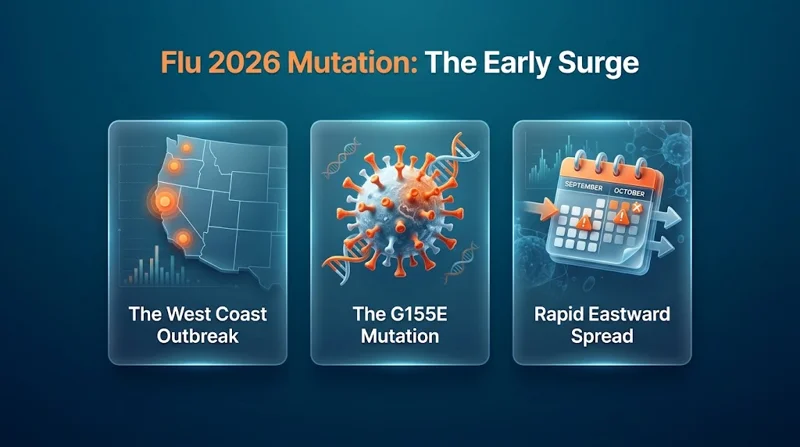
Typically, the influenza season begins in the Southern states around late fall, moving northward as winter progresses. However, this year presents a completely different and alarming scenario.
An unexpected flu 2026 mutation has initiated the season nearly two and a half months earlier than usual, striking the West Coast first.
Public health officials are urging citizens to pay close attention to this flu 2026 mutation, as it is driving high infection rates normally not seen until January.
Contents
The Origins of the flu 2026 mutation and the West Coast Surge
According to data from state health departments, roughly 1 in 10 people tested for influenza in Washington state recently came back positive.
This early wave is largely dominated by the H1N1 virus, a strain known for causing the 2009 pandemic. However, the current virus has evolved into a specific flu 2026 mutation.
This version of the virus originated in Asia and has already wreaked havoc in countries like Japan, leading to widespread school closures.
We are basically seeing January levels of flu in the early fall. The spread is moving rapidly from the Pacific states eastward.
The particular genetic alteration, located at a site called G155E, makes this flu 2026 mutation highly adept at evading our pre-existing immunity.
| Region | Historical Peak Time | flu 2026 mutation Peak Time |
|---|---|---|
| West Coast (WA, CA) | January – February | September – October |
| Southern US (FL, TX) | December | October – November |
| Northeast US (NY, MA) | February | November (Projected) |
Why the flu 2026 mutation Evades the Current Vaccine
The strains for the annual vaccines are usually selected in the spring to allow enough time for manufacturing. Unfortunately, this flu 2026 mutation cropped up after those decisions were made.
Because the majority of vaccines are still grown in chicken eggs—a slow but cost-effective process—updating them in real-time is incredibly difficult.
Despite this mismatch, doctors emphasize that the current shot still targets the broader H1N1 family. This means vaccination will still offer a degree of protection against severe illness caused by the flu 2026 mutation.
Experts monitor these changes closely. For the latest national data, you can consult the US Centers for Disease Control and Prevention.
Vaccination Urgency Amidst the flu 2026 mutation
Walgreens and other national pharmacies report that the season is tracking about four weeks ahead of recent years, with antiviral prescriptions skyrocketing.
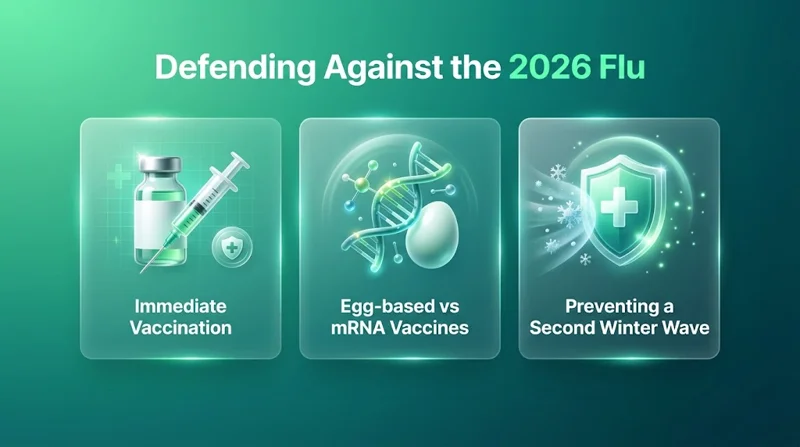
While many people traditionally wait until late October or November to get their shots, the rapid spread of the flu 2026 mutation means that the ideal time to get vaccinated was actually weeks ago.
It is very early, and so I worry about vaccine timing. People aren’t thinking about getting their vaccine so early in the season, which gives the virus an advantage.
There is also growing concern that the flu 2026 mutation could lead to a severe secondary wave of infections later in the winter.
If H1N1 peaks in the fall, another completely different strain could easily sweep through the population in February or March.
| Vaccine Type | Production Method | Adaptability to flu 2026 mutation |
|---|---|---|
| Traditional Shot | Egg-based cultivation | Low (Takes months to adapt) |
| Cell-Based Shot | Mammalian cell culture | Medium (Slightly faster updates) |
| mRNA Vaccine | Genetic sequencing | High (Can be updated rapidly) |
Looking Ahead: Will the flu 2026 mutation Cause a Double Season?
Epidemiologists warn that we must remain vigilant. The unusual timing of this flu 2026 mutation creates the perfect storm for a prolonged season.
Advancements in mRNA technology, much like the developments seen during the Covid-19 pandemic, could eventually solve the issue of delayed vaccine updates.
However, until those vaccines become economically viable and widely distributed, the best defense against the flu 2026 mutation is immediate immunization with the currently available options.
Frequently Asked Questions about the flu 2026 mutation
What exactly is the flu 2026 mutation?
It is a variant of the H1N1 influenza virus that has developed a specific genetic change known as G155E, allowing it to bypass some existing immunity.
Why did the flu season start so early this year?
The highly transmissible flu 2026 mutation was introduced early to the West Coast from Asia, triggering an outbreak months ahead of the usual schedule.
Does the current vaccine protect against the flu 2026 mutation?
Yes, while the virus has mutated slightly, the current vaccine still targets the H1N1 family and provides crucial protection against severe disease.
Where is the flu 2026 mutation spreading the fastest?
Initially, it surged in Pacific states like Washington and California, but it is now rapidly spreading eastward across the entire country.
When is the best time to get vaccinated this year?
Because of the early onset of the flu 2026 mutation, medical professionals advise getting the vaccine immediately rather than waiting for late fall.
Could there be a second wave of the flu this year?
Yes, experts warn that after the flu 2026 mutation peaks in late fall, a second, different strain could cause another wave of infections in early spring.
Why can’t they update the vaccine immediately for the flu 2026 mutation?
Most vaccines are still grown in chicken eggs, a slow process that requires strains to be chosen months in advance. mRNA technology may solve this in the future.
Disclaimer: This article is for informational purposes only and does not constitute medical advice. Always consult a healthcare professional regarding vaccinations and medical treatments.