If you have been searching for answers regarding the 128 text message t mobile reddit phenomenon, you are definitely in the right place. In 2026, many smartphone users continue to experience this bizarre routing anomaly. You check your phone or your detailed billing statement, and suddenly, there are unexplained texts linked to the number 128.
This issue has sparked massive discussion threads across various online communities. Users often panic, assuming their device has been compromised or that they are victims of an elaborate phishing scam. Fortunately, the reality is usually much less malicious, though still incredibly frustrating to deal with.
As telecommunications infrastructure becomes more complex, integrating older SMS systems with modern RCS (Rich Communication Services), odd glitches occur. This article will serve as your ultimate guide to understanding, diagnosing, and resolving the dreaded 128 error on your cellular network.
Contents
What Exactly is the 128 Text Message Glitch?
To understand the problem, we first need to look at how cellular networks handle data. When you send a standard text message, it travels through a relatively straightforward pathway. However, when you send a picture, a video, or participate in a massive group chat, the network switches to a different protocol.
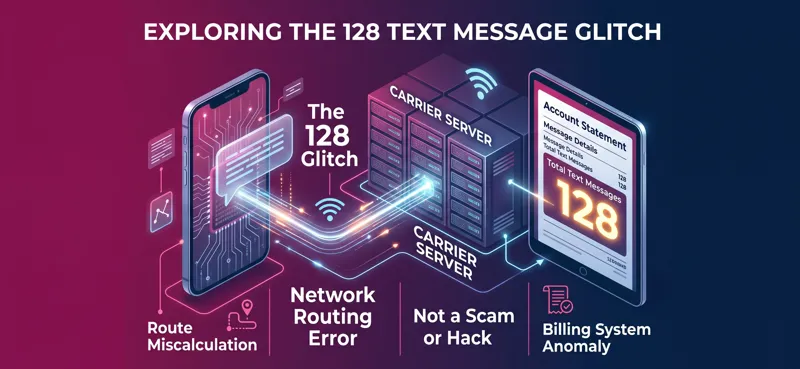
The “128” number usually appears on T-Mobile detailed billing statements under the messaging category. It rarely shows up as an actual sender ID on your phone’s lock screen. Instead, it manifests as a phantom usage log, confusing account holders who meticulously track their data and message limits.
In most instances, the number 128 is not an actual phone number or a commercial shortcode. It is an internal routing code or an error artifact. When the network’s billing system fails to properly translate the origin of a complex multimedia message, it defaults to outputting “128” on the user’s invoice.
| Symptom Type | Where it Appears | Typical User Experience |
|---|---|---|
| Billing Log Anomaly | Monthly PDF Statement | Hundreds of messages sent/received to “128”. |
| Phantom Notifications | Device Lock Screen | A blank message notification that disappears quickly. |
| Group Chat Error | Default SMS Application | Failed media downloads from mixed Android/iOS chats. |
Why the T-Mobile Reddit Community is Obsessed
If you search for solutions online, you will inevitably end up on Reddit. The r/tmobile subreddit has become the unofficial diagnostic center for this specific glitch. Because customer service representatives often lack the deep technical engineering knowledge to explain routing codes, users rely on crowd-sourced intelligence.
Reddit users have spent years tracking the variables associated with the 128 text. They have cross-referenced device types, operating systems, and specific third-party applications. This collaborative effort has yielded more actionable data than many official carrier support pages.
The consensus among network engineers who post anonymously on Reddit is that the glitch is a bridge error. When an Apple iMessage user sends a large file to an Android user on the T-Mobile network via MMS, the conversion server occasionally hiccups, logging the transaction with the error string “128.”
The Technical Difference Between SMS, MMS, and RCS
To fully grasp why this happens, a brief technical primer is necessary. SMS (Short Message Service) is the oldest technology, limited to 160 text characters. MMS (Multimedia Messaging Service) was built on top of SMS to handle pictures and group chats, but it is notoriously clunky and prone to compression issues.
RCS is the modern standard for Android devices in 2026, offering features similar to iMessage, such as read receipts and high-quality image transfers. The “128” error occurs almost exclusively during the translation process between these varying, sometimes conflicting, protocols.
When a message fails to format correctly according to the strict rules of the receiving device’s operating system, the carrier’s server attempts to force it through. This forced delivery often strips the sender’s metadata, replacing the actual phone number with a default internal system code like 128.
The 128 text phenomenon is rarely malicious; it is most often a routing artifact generated by the complex bridging of legacy group messaging protocols and modern digital standards.
| Messaging Protocol | Primary Function | Vulnerability to 128 Error |
|---|---|---|
| Legacy SMS | Plain text under 160 characters | Extremely Low |
| Standard MMS | Images, videos, and group texts | Very High |
| Modern RCS | High-res media, typing indicators | Moderate (during cross-platform bridging) |
Is the 128 Text a Scam or Security Threat?
The immediate fear for most consumers is that their device has been hacked. SIM swapping and SMS phishing (smishing) are rampant threats in 2026. Therefore, seeing a bizarre, unknown number generating hundreds of logs on your account is justifiably alarming.
However, you can generally breathe a sigh of relief. Cybersecurity experts have thoroughly investigated the 128 routing code. There is no evidence to suggest it is linked to malware, spyware, or unauthorized data extraction. It is an internal carrier database error, not a hacker in a distant country.
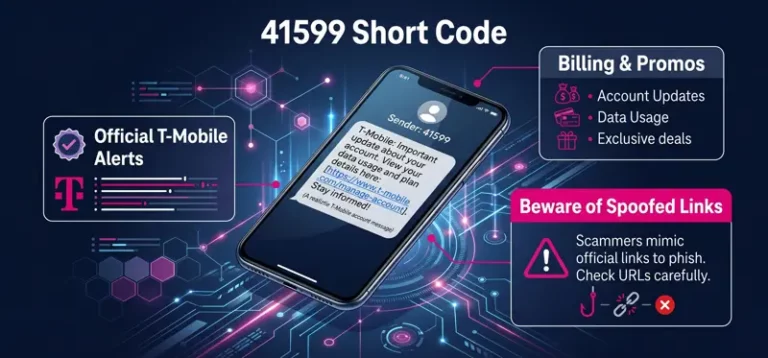
That being said, vigilance is still required. If you ever receive an actual text message on your screen from a sender identifying as “128” that includes a hyperlink, do not click it. While the billing log error is harmless, scammers can easily spoof caller IDs to mimic legitimate carrier system messages.
How to Troubleshoot and Stop the Glitch
While the error is mostly harmless, it clutters your billing statements and can occasionally cause actual messages to fail to download. There are several steps you can take to mitigate the issue. First, ensure your device’s operating system is completely up to date.
Manufacturers frequently release patch updates to address carrier integration bugs. Secondly, try resetting your network settings. This process clears out old cellular tower caches and forces your phone to re-download the most current routing profiles from T-Mobile directly.
If you are part of large group chats that include both iPhone and Android users, consider migrating the conversation to a dedicated messaging app like WhatsApp, Telegram, or Signal. These applications use raw data rather than the carrier’s SMS/MMS gateway, bypassing the 128 error entirely.
| Troubleshooting Step | Action Required | Success Rate |
|---|---|---|
| OS Update | Install the latest iOS or Android patch. | Medium |
| Reset Network Settings | Clear network cache in system settings. | High |
| Use Third-Party Apps | Switch group chats to WhatsApp or Signal. | 100% Effective |
| SIM Card Replacement | Get a new physical SIM or re-download eSIM. | Low |
What T-Mobile Support Says in 2026
If you contact customer service regarding this issue, your experience may vary wildly. Tier 1 support agents often read from standardized scripts and may simply advise you to block the number. Unfortunately, you cannot block an internal routing code through your device settings.
If you escalate the issue to Tier 2 technical support, they are generally more aware of the phenomenon. They can open a network ticket to trace the exact origin of the routing failure. However, they will likely confirm what Reddit has already stated: it is a harmless visual glitch on the backend.
For the most accurate and up-to-date guidance, it is always recommended to check directly with the carrier. You can visit the Official T-Mobile Support Center to look for new service bulletins regarding messaging anomalies.
Always check your detailed billing statement to ensure that hidden shortcode anomalies are not silently draining your prepaid balance or indicating a deeper network synchronization failure.
The Impact of Third-Party Applications
Another variable uncovered by the Reddit community involves third-party applications that have permission to read your SMS data. Apps designed for budget tracking, automated replies, or advanced voicemail transcription sometimes interact poorly with the carrier’s messaging gateway.
If you recently installed an application that requested access to your messaging logs, try revoking those permissions temporarily. Observe your billing statement over the next few days to see if the 128 entries cease. Many users found that overly aggressive spam-blocking apps were actually triggering the network error.
It is essential to audit your app permissions regularly. In 2026, privacy is paramount, and limiting which applications can access your raw communication data not only solves technical glitches but also fortifies your personal security.
Understanding Carrier Shortcodes vs. Routing Errors
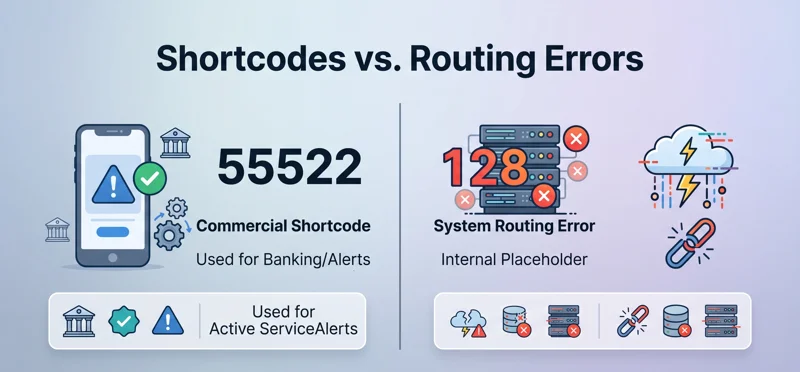
It is important to distinguish between legitimate carrier shortcodes and routing errors. Shortcodes are typically five or six-digit numbers used by businesses for automated marketing, banking alerts, or two-factor authentication.
These commercial shortcodes are registered with a national registry and can usually be opted out of by replying with the word “STOP”. The number 128, being only three digits, does not fit the standard commercial shortcode profile in the United States.
This structural difference is the most prominent clue that 128 is not an external entity trying to reach you, but rather an internal system placeholder. When a message’s actual metadata is lost in transit, the billing software inserts “128” simply because the database field cannot remain entirely blank.
| Identifier Type | Digit Length | Typical Purpose | Actionability |
|---|---|---|---|
| Commercial Shortcode | 5 to 6 digits | Banking, Retail Alerts, 2FA | Can reply “STOP” |
| System Routing Error (128) | 2 to 3 digits | Backend database placeholder | Cannot be blocked manually |
| International Spam | 10+ digits with country code | Phishing and scams | Block caller ID immediately |
Will T-Mobile Ever Permanently Fix This?
As we navigate through 2026, telecommunications infrastructure is constantly being upgraded. The shift towards universal RCS adoption is expected to eventually phase out these legacy MMS routing errors entirely. Apple’s integration of standard RCS protocols has helped reduce these cross-platform friction points.
However, legacy backend billing software is notoriously slow to update. Even if the messages are flowing perfectly on the front end of your device, the billing servers may still rely on archaic categorization rules that generate the 128 error on your monthly PDF invoice.
Until a comprehensive overhaul of the carrier’s billing database is completed, users will likely continue to see occasional strange codes. The best course of action is to stay informed, rely on community troubleshooting, and not let phantom numbers cause unnecessary anxiety regarding your digital security.
You may also like: 128 T-Mobile Text: Decoding the Mystery and Understanding Its Implications
Frequently Asked Questions
Will the 128 text messages cost me extra money on my T-Mobile bill?
Generally, no. Most modern T-Mobile plans include unlimited texting. The 128 logs are just backend data errors and do not incur individual premium message charges.
Can I block the number 128 on my smartphone?
No, because 128 is an internal network routing code rather than an actual phone number, standard device blocking features will not prevent it from appearing on your billing logs.
Is my phone hacked if I see 128 on my bill?
No, seeing 128 on your billing statement is not an indicator of a hack, malware, or SIM swapping. It is simply a cross-platform messaging integration glitch.
Why does this happen more in group chats?
Group chats, especially those mixing Apple and Android devices, require complex server-side translation using older MMS protocols, which frequently triggers the routing error.
Can T-Mobile customer support remove these logs from my statement?
Customer support cannot retroactively alter an official billing statement. However, they can verify that the logs are harmless system errors for your peace of mind.
Does this issue only affect T-Mobile users?
While highly prevalent on T-Mobile due to their specific network architecture, users on AT&T and Verizon occasionally report similar short-digit routing anomalies.
Should I click links if a message from 128 actually appears on my screen?
Absolutely not. While the billing error is harmless, scammers can spoof numbers. Never click unsolicited links from unknown or bizarrely short sender IDs.
Disclaimer: This article is for informational purposes only. Procedures, compatibility, and policies may change based on carrier updates and device manufacturer specifications. Always consult official carrier documentation for the most accurate and up-to-date information.