
The genetic technique that finds almost every infection is rapidly changing the landscape of modern medicine in 2026. When standard medical tests fail to identify mysterious pathogens, doctors are no longer left guessing. A groundbreaking screening method known as metagenomic testing is stepping in to save lives by revealing all microorganisms present in a patient’s sample.
Contents
The Origins of the Genetic Technique That Finds Almost Every Infection
To understand the power of this technology, we must look back to late December 2019. A team of virologists in Wuhan faced patients hospitalized with severe, unexplained pneumonia. Traditional swabs drew a blank. The genetic material did not match any known pathogen.
The scientists turned to metagenomic testing diagnostics. Instead of looking for specific, known microbes, this test sequenced everything in the sample. This allowed them to discover Covid-19. Because the genetic technique that finds almost every infection does not require prior knowledge of the pathogen, it acts as the ultimate diagnostic safety net.
This early success kickstarted a revolution. Knowing the exact pathogen allowed for rapid Covid diagnostics and vaccine development. Today, this same approach is used to uncover unexplained respiratory infection causes in hospitals worldwide.
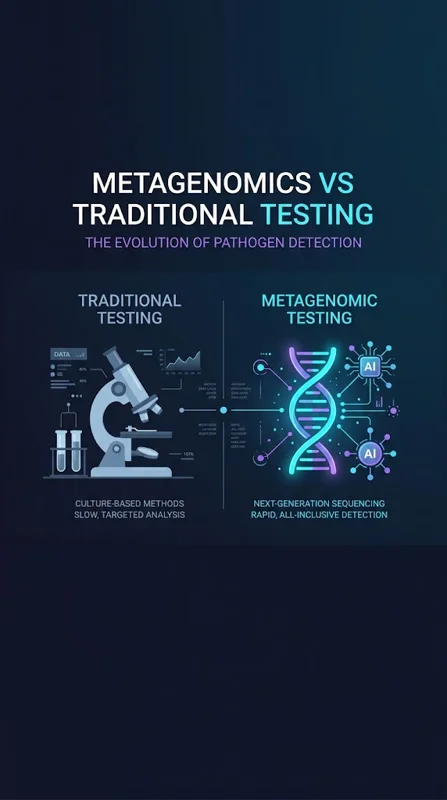
| Feature | Traditional Testing | Metagenomic Testing |
|---|---|---|
| Pathogen Targeting | Requires suspecting a specific microbe | Sequences all DNA/RNA in the sample |
| Discovery Potential | Low (only finds what you look for) | High (can discover novel viruses) |
| Processing Speed | Hours to days per specific test | Accelerated rapidly by AI tools |
How the Genetic Technique That Finds Almost Every Infection Saves Lives
Whenever a patient arrives in a neurological ward with signs of confusion, fever, and weakness, time is critical. These symptoms often indicate life-threatening conditions. Doctors face a dilemma: is the cause viral, bacterial, or autoimmune? With limited time, they often treat for both, which can involve dangerously suppressing the immune system.
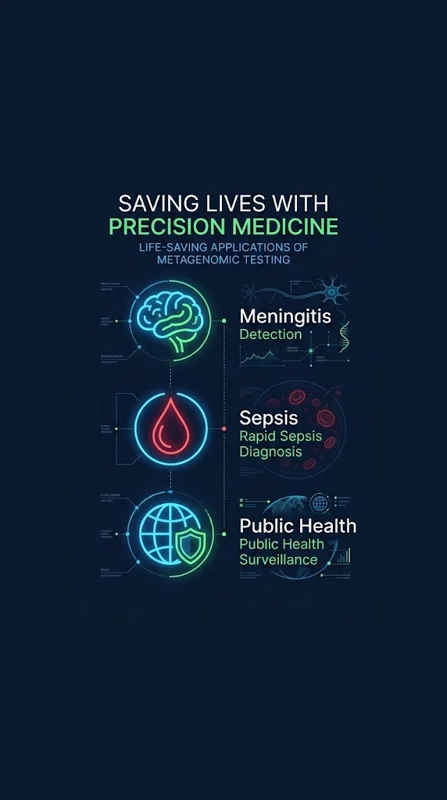
Metagenomics is solving this exact problem. For example, cerebrospinal fluid meningitis diagnosis has been completely transformed. In one remarkable case, a patient scheduled for a liver transplant due to meningitis and liver failure was tested using this method. The test revealed an infection with the hepatitis E virus. She was given antivirals, recovered, and avoided an unnecessary transplant.
“Metagenomics is the ultimate gamechanger, turning days of diagnostic guesswork into hours of targeted, life-saving precision.”
By relying on the genetic technique that finds almost every infection, physicians can avoid the “diagnostic odyssey” of sending out test after test while the patient’s condition deteriorates.
AI-Enhanced Pathogen Sequencing in the Genetic Technique That Finds Almost Every Infection
Historically, separating human DNA from microbial DNA took up to a week. A patient could easily succumb to their illness before results arrived. However, modern medicine has integrated AI-enhanced pathogen sequencing into the workflow. Machines can now sequence DNA in under two hours.
For immunocompromised individuals, such as transplant recipients or cancer patients, an infection can quickly lead to sepsis. AI tools ingest vast datasets, filtering out harmless background viruses and lab contaminants to pinpoint the exact cause. This enables true precision medicine for sepsis.
| Medical Condition | Diagnostic Challenge | Metagenomic Solution |
|---|---|---|
| Sepsis | Hundreds of potential causes | Identifies exact pathogen within hours via AI |
| Meningitis | Differentiating viral vs. bacterial vs. autoimmune | Analyzes cerebrospinal fluid for all DNA traces |
| Co-infections | Finding which virus is actively causing harm | Analyzes gene expression to find the active threat |
AI also helps determine whether a patient is actively fighting a virus or merely co-existing with it by analyzing gene expression. This capability ensures that treatments are customized and optimal.
Reshaping Public Health with the Genetic Technique That Finds Almost Every Infection
Beyond individual patient care, hospitals and governments are realizing the broader impact of this technology. Recent pilot studies in major hospitals found that metagenomic tests identified pathogens missed by routine checks up to 30% of the time. In one instance, a patient presumed to have lung cancer was actually suffering from tuberculosis, saving them from invasive surgery.
“By testing wastewater and air samples, proactive metagenomic monitoring acts as our first line of defense against the next global pandemic.”
Health authorities, including groups like the World Health Organization, are looking at metagenomics for epidemic monitoring. By running these tests on sewage and air samples, AI models can detect rising viral threats months before clinical cases spike, proving that the genetic technique that finds almost every infection is essential for public health.
Frequently Asked Questions
Q: Can the genetic technique that finds almost
What is the genetic technique that finds almost every infection?
It is known as metagenomic testing, a process that sequences all the DNA and RNA in a patient sample to identify all present microorganisms, rather than looking for just one specific bug.
How does the genetic technique that finds almost every infection differ from standard tests?
Standard tests require a doctor to guess which virus or bacteria is causing the illness to test for it. Metagenomics looks at everything at once, finding even unknown or unexpected pathogens.
Why is AI-enhanced pathogen sequencing important?
AI drastically speeds up the analysis process, filtering out normal human DNA and harmless background microbes to find the dangerous pathogen in just hours instead of days.