
Artificial intelligence enabled clinical phenotyping of human brown fat represents a monumental breakthrough in modern metabolic science in 2026.
For decades, researchers have understood that brown adipose tissue (BAT) burns energy to generate heat, unlike white fat which stores energy.
However, measuring its true clinical impact across large populations was nearly impossible until recent advancements in machine learning.
Today, advanced AI clinical phenotyping has analyzed massive medical datasets to uncover exactly how this thermogenic tissue protects the human body.
These revelations are not only changing our understanding of cardiometabolic disease prevention but also exposing surprising new treatments.
Contents
The Impact of Artificial intelligence enabled clinical phenotyping of human brown fat
A landmark study utilized a cutting-edge machine learning approach to evaluate over 100,000 patients from Memorial Sloan Kettering.
This massive Artificial intelligence enabled clinical phenotyping of human brown fat demonstrated clear links between active BAT and reduced disease rates.
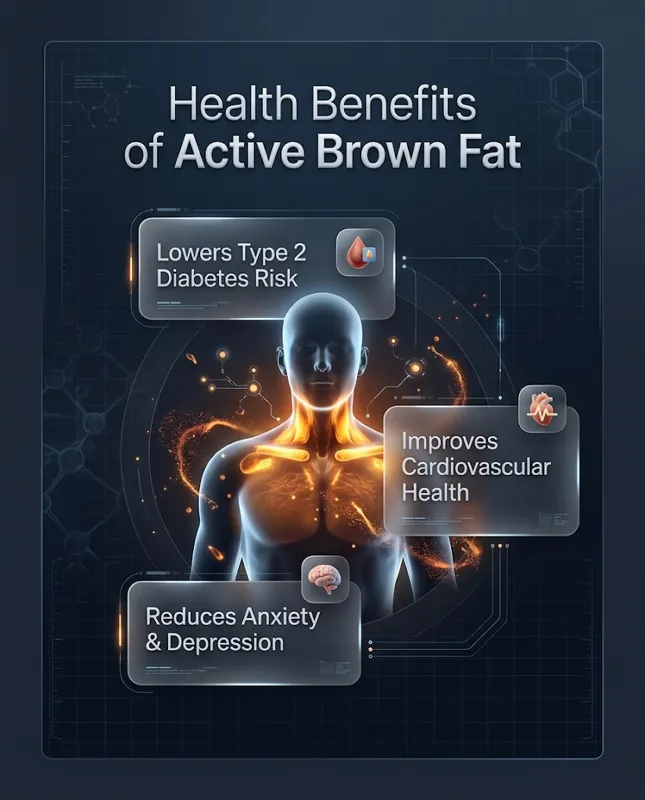
Patients who exhibited detectable brown adipose tissue activation showed a significantly lower prevalence of type 2 diabetes and hypertension.
Surprisingly, the AI analysis also uncovered that patients with active brown fat had far lower rates of anxiety and depression.
| Health Condition | Prevalence in BAT Positive Patients | Metabolic Impact |
|---|---|---|
| Type 2 Diabetes | Significantly Lower (OR 0.42) | Improved glucose clearance |
| Hypertension | Significantly Lower (OR 0.79) | Better vascular health |
| Depression & Anxiety | Significantly Lower | Systemic inflammatory reduction |
Unlocking Human BAT Thermogenesis
Through Artificial intelligence enabled clinical phenotyping of human brown fat, scientists discovered that specific fat depots play unique roles.
The axillary depot, located near the armpits, showed the strongest association with cardiometabolic disease prevention and healthier white fat distribution.
This form of human BAT thermogenesis actively improves lipid profiles, lowers inflammatory markers, and boosts overall heart health.
“By harnessing big data and machine learning, researchers have definitively linked brown fat activity to robust cardiovascular and psychiatric health, transforming our view of human metabolism.”
Losartan: A Surprise in Artificial intelligence enabled clinical phenotyping of human brown fat
Perhaps the most exciting discovery from the Artificial intelligence enabled clinical phenotyping of human brown fat involves standard medications.
By cross-referencing patient medication usage with brown fat activity, the AI flagged a highly common blood pressure drug: Losartan.
The data revealed undeniable Losartan brown fat benefits, showing that patients taking this Angiotensin Receptor Blocker (ARB) had significantly higher BAT presence.
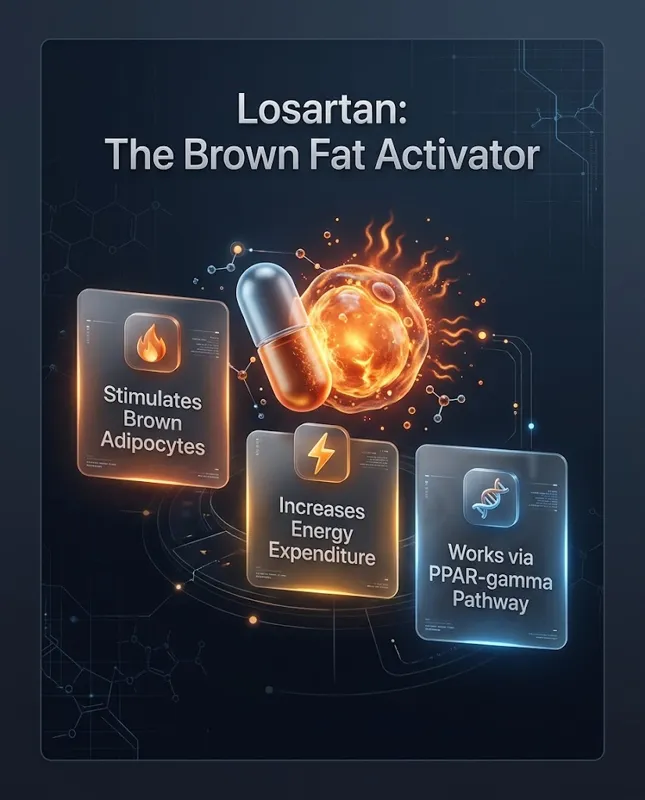
In subsequent laboratory tests, researchers proved that Losartan actively stimulates brown adipocytes and increases whole-body energy expenditure.
| Intervention Type | Mechanism of Action | Therapeutic Potential |
|---|---|---|
| Cold Exposure | Sympathetic nervous system stimulation | High, but difficult to sustain clinically |
| Mirabegron | Beta-3 adrenergic receptor agonism | Moderate, potential cardiovascular side effects |
| Losartan | PPAR-gamma dependent pathway activation | Excellent, safe, widely available and repurposed |
Future Therapies with Artificial intelligence enabled clinical phenotyping of human brown fat
The implications of Artificial intelligence enabled clinical phenotyping of human brown fat are truly staggering for future obesity treatments.
Because Losartan activates the PPAR-gamma pathway independently of its blood pressure effects, it acts as a unique metabolic supercharger.
This opens up massive potential for drug repurposing to safely induce brown adipose tissue activation in human patients.
“Finding that a common blood pressure medication can actively recruit and stimulate brown adipocytes opens entirely new therapeutic doors for metabolic disease.”
Instead of relying on uncomfortable cold exposure, doctors may soon prescribe specific ARBs simply to enhance metabolic burn.
To read more about the underlying AI methodologies used in modern medical imaging, you can explore the official Nature journal publications.
Ultimately, Artificial intelligence enabled clinical phenotyping of human brown fat proves that our bodies hold incredible, untapped mechanisms for healing.
Frequently Asked Questions
What is Artificial intelligence enabled clinical phenotyping of human brown fat?
It is the use of advanced machine learning algorithms to analyze tens of thousands of PET-CT scans to accurately measure brown fat activity and link it to patient health outcomes.
How does human BAT thermogenesis actually work?
Unlike white fat which stores calories, brown adipose tissue (BAT) burns glucose and lipids to generate physical heat, effectively increasing your daily energy expenditure.
What did the AI clinical phenotyping study reveal about mental health?
The massive data analysis revealed a surprising negative correlation, showing that patients with highly active brown fat suffer from significantly less anxiety and depression.
Does brown fat help with cardiometabolic disease prevention?
Yes. Active brown fat improves blood sugar clearance, optimizes lipid profiles, and lowers systemic inflammation, drastically reducing the risk of type 2 diabetes and heart disease.
What are the specific Losartan brown fat benefits?
Losartan was found to actively stimulate the growth and thermogenic activity of brown adipocytes through a specific cellular pathway called PPAR-gamma.
How does Losartan cause brown adipose tissue activation?
It works independently of its standard blood pressure-lowering mechanism by acting directly on the fat cells to increase the expression of UCP1, the protein responsible for burning energy.
Can I use Losartan for weight loss now?
While the metabolic benefits are incredibly promising, Losartan is still a prescription medication primarily for hypertension. You must consult your doctor before using it for any off-label metabolic purposes.
Disclaimer: This article is for informational purposes only and does not constitute medical advice. Always consult a qualified healthcare provider regarding medication changes and health conditions.