
Retatrutide reduces knee pain and body weight in osteoarthritis patients, marking a historical breakthrough in medical science for 2026. For millions of people suffering from both obesity and joint degradation, everyday activities such as walking, climbing stairs, and standing up have long been a painful struggle.
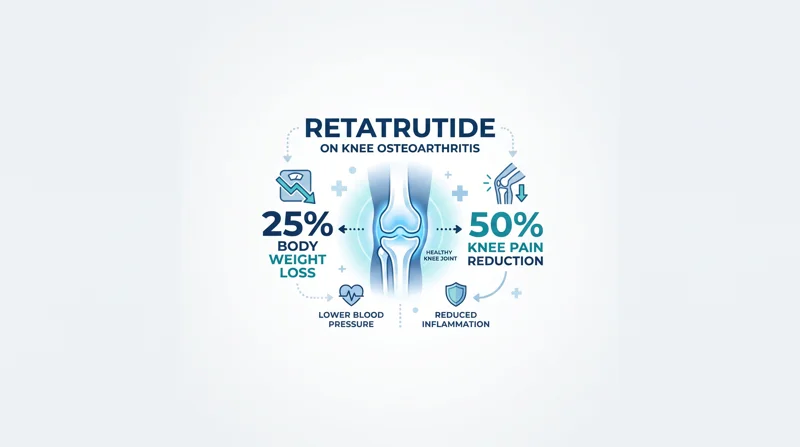
Recent phase 3 clinical trials, led by Northwestern University, evaluated over 1,000 participants. The results were staggering. Patients receiving the highest dose of this experimental injectable weight-loss medication lost an average of 25% of their body weight.
Even more importantly, the trials confirmed that this dramatic weight loss led to unprecedented joint relief. About two-thirds of the subjects reported a minimum 50% decrease in joint agony, a metric that far outpaces current standard treatments.
Contents
How Retatrutide Reduces Knee Pain and Body Weight in Osteoarthritis Patients
The core science behind how Retatrutide reduces knee pain and body weight in osteoarthritis patients lies in joint loading. When a person carries excess weight, the physical stress on the knee joints multiplies exponentially.
By shedding a quarter of their body mass, patients relieve this mechanical stress. Less mechanical loading directly translates to less pain and increased physical mobility. Furthermore, adipose (fat) tissue produces inflammatory chemicals. Reducing fat mass actively cuts down systemic joint inflammation.
Clinical Trials Show Retatrutide Reduces Knee Pain and Body Weight in Osteoarthritis Patients
The data from the TRIUMPH-4 and TRIUMPH-1-OA clinical trials are undeniable. Using the Western Ontario and McMaster Universities Arthritis Index (WOMAC), researchers tracked daily pain levels. The improvements were so vast that researchers consider this a major turning point in rheumatology.
If you lose a significant amount of weight with this treatment, there is a good chance that you’re going to get a meaningful reduction in your knee pain.
Traditional remedies like corticosteroid injections only provide short-term symptomatic relief. Physical therapy is often too painful for obese patients to perform consistently. The fact that Retatrutide reduces knee pain and body weight in osteoarthritis patients simultaneously offers a dual-action solution.
| Treatment Option | Average Weight Loss | Pain Reduction Efficacy |
|---|---|---|
| Retatrutide | 20% – 25% | Over 50% relief in 66% of users |
| GLP-1s (Semaglutide) | 10% – 20% | Moderate relief |
| Corticosteroids | 0% | Short-term, temporary relief |
Why Retatrutide Reduces Knee Pain and Body Weight in Osteoarthritis Patients Better Than GLP-1s
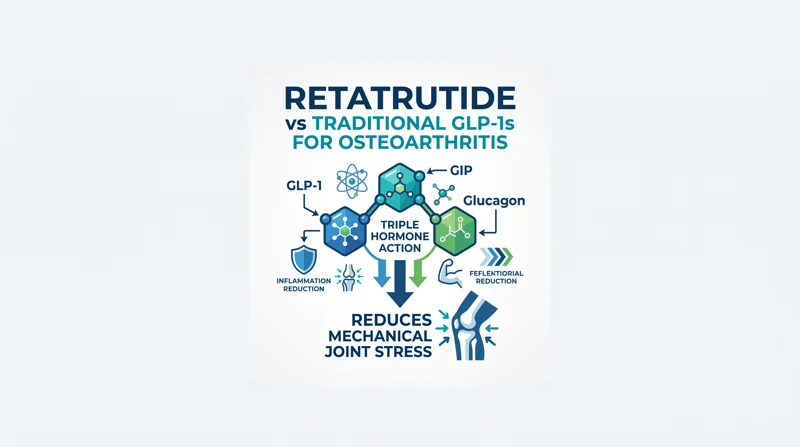
Developed by Eli Lilly, Retatrutide is not just another GLP-1 agonist. It is a “triple G” hormone receptor agonist, targeting GLP-1, GIP, and glucagon receptors. This triple-action mechanism accelerates fat burning and appetite suppression far beyond older generations of weight-loss injections.
Because Retatrutide reduces knee pain and body weight in osteoarthritis patients more effectively, it holds the potential to prevent total knee replacement surgeries. It stops the destructive cycle of pain preventing exercise, which in turn prevents weight loss.
Many of the people in this study lost considerable amounts of weight, with a few losing up to a hundred pounds or more.
Aside from joint health, the secondary metabolic benefits are astounding. Patients in the trial exhibited vastly improved cardiovascular markers. For an in-depth look at similar pharmaceutical advancements, you can read more at the New England Journal of Medicine.
| Health Metric | Impact Observed in Clinical Trials |
|---|---|
| Blood Pressure | Significant reduction across trial groups |
| Lipid Levels | Lowered naturally due to metabolic reset |
| Systemic Inflammation | Decreased, aiding overall joint health |
Frequently Asked Questions
How exactly is it true that Retatrutide reduces knee pain and body weight in osteoarthritis patients?
It operates as a triple hormone receptor agonist, heavily suppressing appetite and boosting metabolism. The massive weight reduction takes physical pressure off the knees, instantly relieving mechanical joint pain.
What is the average weight loss observed with this drug?
Clinical trials from Northwestern University revealed that participants lost between 20% to 25% of their total body weight, with some losing over 100 pounds.
Can this medication replace knee replacement surgery?
While studies are ongoing, researchers hope that because it dramatically lowers pain and mechanical stress, it might slow the progression of the disease enough to delay or prevent total joint replacement.
How does it compare to semaglutide or tirzepatide?
Current GLP-1 drugs target one or two receptors, yielding 10%-20% weight loss. Retatrutide targets three natural hormones, pushing weight loss up to 25% with stronger anti-inflammatory effects.
Does Retatrutide have anti-inflammatory properties?
Yes. Fat tissue generates inflammation. By reducing fat, systemic inflammation drops. Additionally, scientists believe the drug itself may possess direct anti-inflammatory mechanisms within the joints.
Do patients still need to diet and exercise?
Absolutely. Diet and exercise remain the foundational standard of care. Retatrutide acts as a powerful catalyst for those who are unable to exercise due to severe knee pain.
Are there secondary benefits to this treatment?
Yes, trial participants also experienced notable improvements in their blood pressure, reduced lipid levels, and vastly improved cardiovascular health profiles.
Disclaimer: This article is for informational purposes only, and does not constitute medical advice. We are not affiliated with Eli Lilly, Northwestern University, or any governmental health organization. Always consult your physician before starting any new medical treatments.