A remarkable new picture is emerging of how the air around us could harm the brain.
For decades, science has linked poor air quality to respiratory and cardiovascular ailments. However, startling recent discoveries have fundamentally shifted our understanding of environmental health.
Pollution is no longer just an indirect threat that triggers systemic inflammation. Researchers are now finding physical evidence of external debris nestled deep within the intricate structures of the human mind.
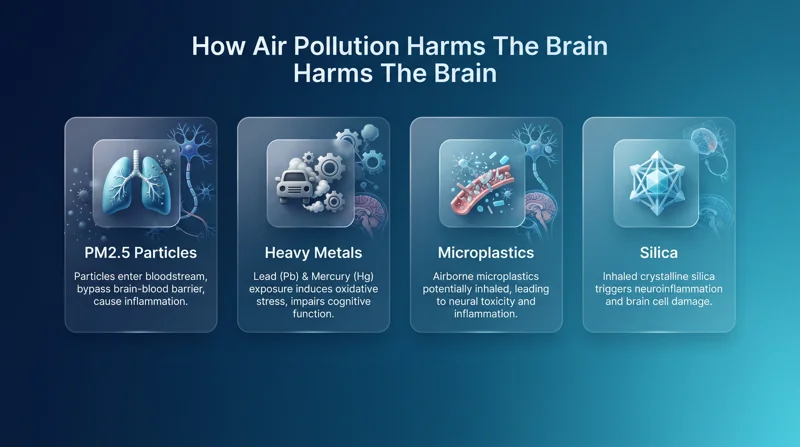
Last year, scientists were stunned to discover that the average human brain studied contained roughly the weight of a plastic spoon in microplastics and nanoplastics. Today, an even deeper look suggests a much broader assortment of material from the outside world is penetrating the blood-brain barrier.
Materials such as silica, heavy metals, soot, and microscopic debris are getting through, raising profound questions about cognitive longevity in heavily polluted areas.
Contents
Understanding Why A Remarkable New Picture Is Emerging Of How The Air Around Us Could Harm The Brain
Researchers from the Rush Alzheimer’s Disease Center and other leading institutions recently examined brain tissue from 11 individuals who died between the ages of 80 and 91.
Their findings were extraordinary. They discovered that some particles had penetrated deep into the brain, reaching the amygdala—a critical region responsible for shaping emotion and memory.
This finding represents a broad shift in how scientists think about the link between air pollution and conditions that impact cognitive function, such as dementia, Parkinson’s disease, and autism.
For years, a leading explanation was that pollution harms the central nervous system indirectly by triggering systemic inflammation. While that idea remains valid, experts are now exploring whether that pollution may also act more directly.
There is a lot we do not understand yet, but we do know that the risk of dementia increases in proportion to the amount of air pollution over a lifetime.
To fully grasp the magnitude of this issue, we must look at the diverse nature of pollutants that are currently saturating our atmosphere.
| Pollutant Type | Primary Sources | Impact on Cognitive Health |
|---|---|---|
| PM2.5 Particles | Vehicle exhaust, wildfires, industrial emissions | Enters bloodstream, linked to brain volume reduction |
| Heavy Metals | Construction dust, diesel exhaust, industrial waste | Alters gene expression, damages cellular fats |
| Micro/Nanoplastics | Degraded consumer plastics, synthetic fibers | Accumulates in brain tissue, triggers inflammation |
| Silica & Soil Debris | Dust storms, land degradation, agricultural work | Physical accumulation in regions like the amygdala |
The Mechanics: A Remarkable New Picture Is Emerging Of How The Air Around Us Could Harm The Brain
The exact mechanics of how these particles travel into the brain and what happens once they arrive remain an active area of investigation.
Scientists are tracing pathways, such as the olfactory nerve, which provides a direct route from the nasal cavity to the brain, bypassing traditional bodily defenses.
Simultaneously, other studies are revealing potential changes in brain structure, proteins, and metabolism associated with long-term pollution exposure. This body of work could help connect what people breathe today with neurodegenerative diseases that may emerge decades later.
Professor Caleb Finch, an expert at the University of Southern California’s Leonard Davis School of Gerontology, points out that there is growing evidence that these toxic exposures may begin as early as in pregnancy.
These particles accumulate across a lifetime, turning a chronic, low-level environmental hazard into a severe biological threat. For more comprehensive data on environmental hazards, you can review the standards provided by the Environmental Protection Agency.
Clinical Evidence: A Remarkable New Picture Is Emerging Of How The Air Around Us Could Harm The Brain
Climate change is rapidly altering the air around us, making these questions more urgent than ever. Hotter, drier conditions are fueling larger and more intense wildfires.
Drought and land degradation increase the risk of massive dust storms, sending enormous clouds of smoke, soil, minerals, and microscopic debris across states and continents.
Several studies published this year using the UK Biobank—a vast repository of health data from hundreds of thousands of people in Britain—offer critical clues about how breathing polluted air translates into physical changes in the brain.
| Study Focus | Sample Size | Key Findings (Published April/May) |
|---|---|---|
| Dementia Risk & PM2.5 | 400,000+ people | 14% higher dementia risk for highest PM2.5 exposure |
| Brain Volume Changes | Subset with scans | Reduction in global and several regional brain volumes |
| Hippocampus Structure | 270,000 people | PM2.5 exposure associated with structural hippocampal changes |
A study published in the Journal of Nutrition, Health & Aging followed over 400,000 people for nearly 14 years. It recorded nearly 9,000 cases of dementia.
The individuals with the highest exposure to PM2.5—particles one-thirtieth the width of a human hair that enter the bloodstream easily—faced a 14 percent greater risk of developing dementia compared to those with the lowest exposure.
Brain Shrinkage: A Remarkable New Picture Is Emerging Of How The Air Around Us Could Harm The Brain
More surprising than the statistical risk was what showed up on actual medical imaging. Brain scans of individuals exposed to highly polluted air revealed a marked reduction in overall brain volume.
These findings suggest a grim biological progression: pollution leads to accelerated cellular aging, which causes brain atrophy, ultimately resulting in cognitive decline and clinical dementia.
The evidence points to a chilling reality: breathing dirty air does not just affect our lungs; it physically shrinks the vital structures of our brain responsible for learning and memory.
A second study looked at structural changes in the hippocampus, a brain region essential to learning and memory. The research identified that systemic inflammation and alterations in how the body processes fats accounted for a portion of the link between pollution and cognitive disease.
Toxic Components: A Remarkable New Picture Is Emerging Of How The Air Around Us Could Harm The Brain
One of the most pressing questions in environmental neurology is identifying which components of polluted air are the most hazardous. What we breathe is not a single entity but a shifting, complex mixture of particles, metals, gases, and chemicals.
In a groundbreaking September study, researchers compared the neurological effects of three distinct pollutants: diesel exhaust, dust collected from the World Trade Center site, and wood smoke.
| Pollutant Tested | Composition Characteristics | Effect on Genes and Brain Tissue |
|---|---|---|
| Diesel Exhaust | Rich in heavy metals and fine soot | Altered over 1,200 genes, processed amyloid proteins |
| World Trade Center Dust | Complex urban debris, highly metallic | Matched diesel exhaust in triggering severe inflammation |
| Wood Smoke | Organic particulate matter, low in metals | Did not produce the same Alzheimer’s-related gene changes |