Microplastics in water aren’t inert and make damaging chemicals on their own. For decades, the global consensus was that plastics used in food containers, cups, and bags were chemically inactive. However, a groundbreaking 2026 study from Columbia University has shattered this assumption. As these plastics break down into microscopic fragments, they do much more than simply pollute our environment.
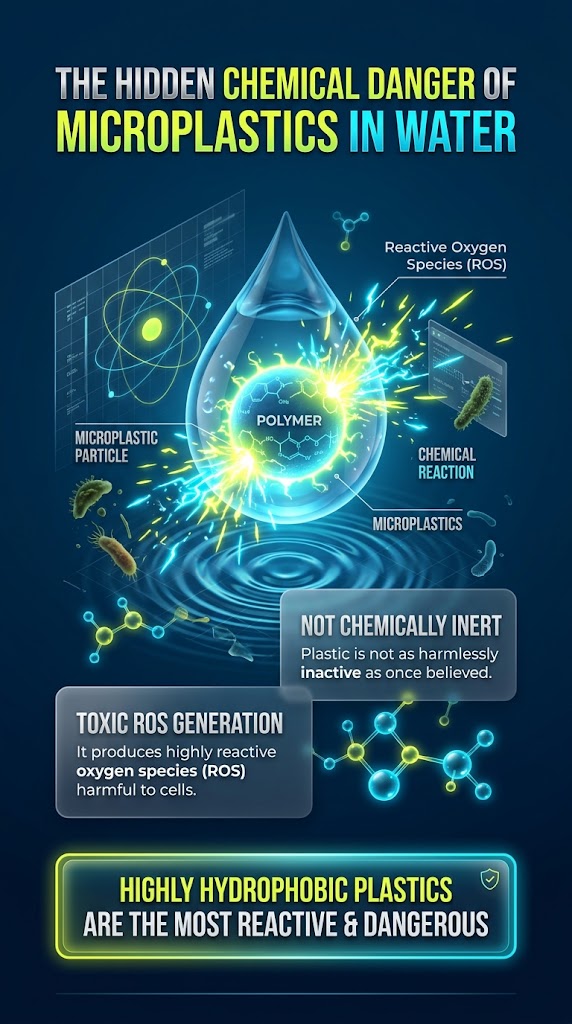
Recent research reveals a hidden danger lurking in our daily hydration. When plastic particles interact with water, they initiate a chemical reaction that generates reactive oxygen species (ROS). These harmful, oxygen-containing molecules are known to wreak havoc on cellular structures.
Contents
Understanding Why Microplastics in water aren’t inert and make damaging chemicals on their own
The core of this discovery lies in plastic-water interface chemistry. The Columbia University team, led by chemist Wei Min, utilized advanced electron spin resonance techniques to detect highly reactive radicals. They found that the boundary between water and plastic is far from inactive.
When water molecules press against water-repellent plastic surfaces, their normal structure is disrupted. This disruption lowers the energy required to strip an electron from hydroxide ions, spontaneously creating dangerous hydroxyl radicals. Therefore, it is now a scientific fact that Microplastics in water aren’t inert and make damaging chemicals on their own.
“The simplest answer is the most water-repellent ones change the water structure the most, proving that microplastics in water aren’t inert and make damaging chemicals on their own.”
The Science Behind How Microplastics in water aren’t inert and make damaging chemicals on their own
Researchers tested six common plastics, including polyethylene, polypropylene, polystyrene, PVC, PET, and acrylic. The results were alarming. All of them generated radicals, but the most water-repellent plastics, such as polyethylene and polypropylene, were by far the most active.
To further validate these findings, scientists used fluorescent sensors that light up upon reacting with hydroxyl radicals. Under a microscope, the glow was heavily concentrated on the surfaces of the plastic particles. This visual evidence confirmed the theory of microplastic toxicity and oxidative stress.
| Plastic Type | Water Repellency | Radical Generation Level |
|---|---|---|
| Polyethylene | High | Extremely Active |
| Polypropylene | High | Extremely Active |
| PET & Acrylic | Low (Attracts Water) | Least Active |
Health Impacts: Microplastics in water aren’t inert and make damaging chemicals on their own
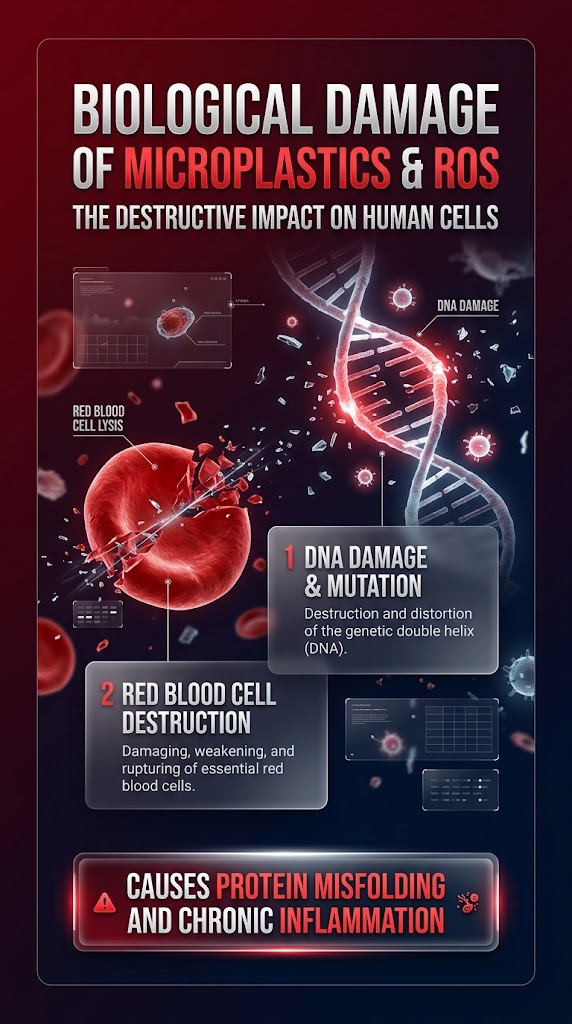
The biological consequences of these generated chemicals are severe. Reactive oxygen species (ROS) are known to bump into proteins, lipids, and DNA, causing significant cellular damage. You could break a DNA strand into segments, mutate DNA, or cause protein misfolding.
During the study, mouse red blood cells that came into contact with polystyrene particles actually broke into fragments. This direct DNA and protein damage highlights the severe nanoplastics health risks that humans face daily as these microscopic particles travel through our blood, arteries, and brains.
“If you are really at the interface, you could be significantly affected by this effect, revealing why Microplastics in water aren’t inert and make damaging chemicals on their own.”
Mitigating Nanoplastics Health Risks and Future Solutions
Understanding that Microplastics in water aren’t inert and make damaging chemicals on their own is just the first step. The magnitude of this effect compared to the ROS our own cells naturally produce is still being investigated. However, animal studies frequently link ROS to chronic inflammation and oxidative stress.
For ongoing updates on environmental health and scientific breakthroughs, you can review the latest Nature studies.
| Biological Target | Observed Impact of ROS | Potential Long-term Health Risk |
|---|---|---|
| DNA Strands | Fragmentation and Mutation | Genetic diseases and cancer |
| Proteins (e.g., Lysozyme) | Clumping and Misfolding | Chronic inflammation |
| Red Blood Cells | Physical Fragmentation | Cardiovascular and blood disorders |
The plastics industry may need to adapt by designing materials that are less water-repellent. By altering the molecular structure or adding specific additives, manufacturers might mitigate the plastic-water interface chemistry that causes these harmful reactions.
FAQ
Are plastic containers completely chemically inactive?
No. Recent 2026 studies prove that Microplastics in water aren’t inert and make damaging chemicals on their own when they break down and interact with water.
What exactly do these microplastics generate in water?
They generate reactive oxygen species (ROS), particularly highly reactive hydroxyl radicals, at the boundary where the plastic meets the water.
How do these chemicals affect human health?
These chemicals can cause microplastic toxicity and oxidative stress, leading to DNA mutations, protein misfolding, and damage to red blood cells.
Which types of plastics produce the most harmful chemicals?
The most water-repellent plastics, such as polyethylene and polypropylene, generate the highest amount of radicals.
Do nanoplastics pose a greater risk than larger microplastics?
Yes. Nanoplastics have a much larger surface area relative to their mass, which amplifies the plastic-water interface chemistry and makes the toxic effect larger.
Can adding substances like caffeine help reduce the damage?
In laboratory settings, adding caffeine was shown to mop up radicals and largely stop proteins from clumping, confirming that the radicals were the cause of the damage.
Is there a way to manufacture safer plastics in the future?
Researchers suggest that by changing the molecular structure to make plastics less water-repellent, the harmful interface chemistry could be significantly reduced.
Disclaimer: This article is for informational purposes only and does not constitute medical or environmental advice. Consult relevant scientific literature and healthcare professionals for health-related concerns.